Rooted in Wyoming’s Garden-to-Cafeteria Classes
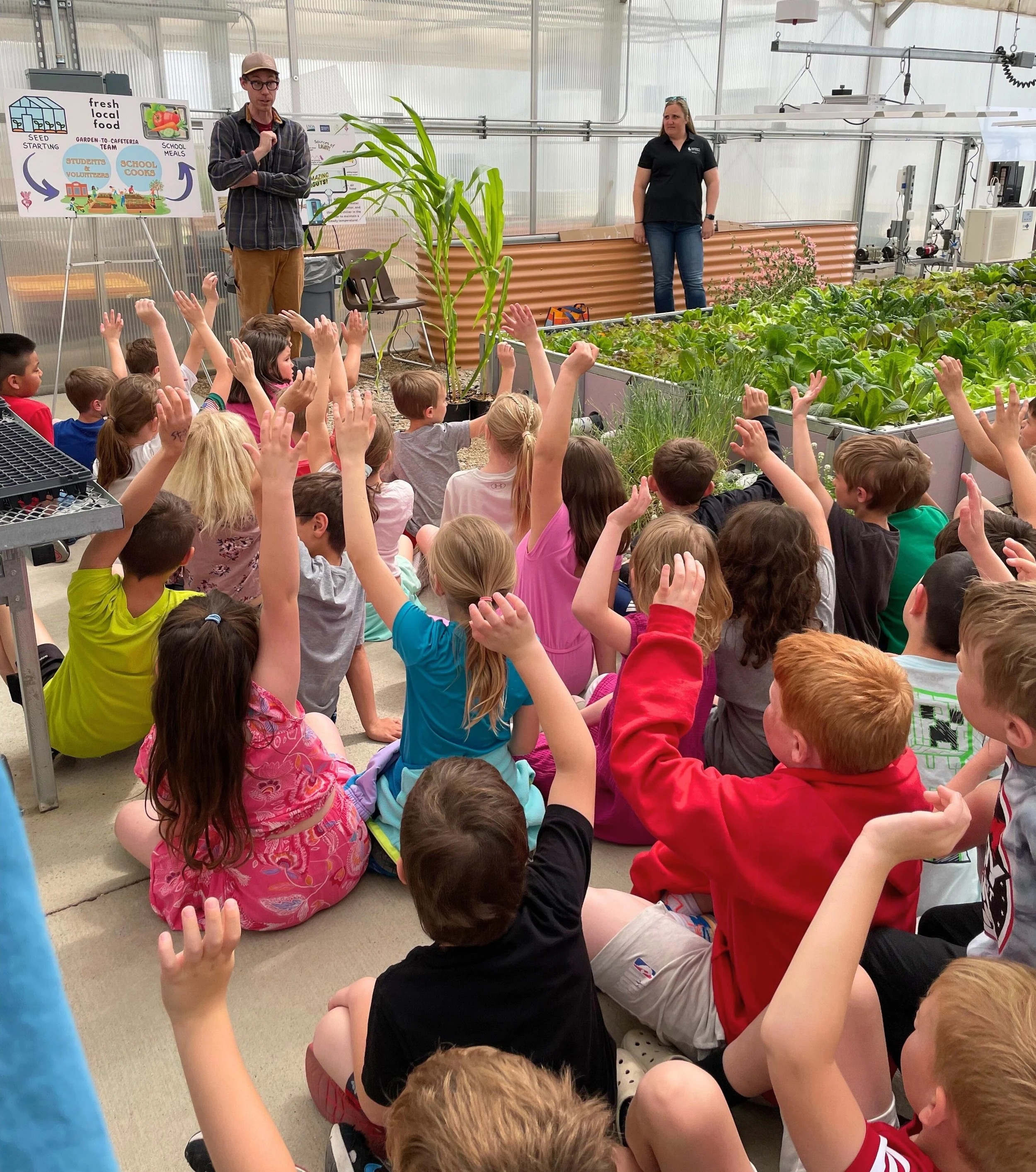
Rooted in Wyoming's Garden to Cafeteria Classes give students hands-on experience with soil science, vermiculture, and growing vegetables from seed using nearly all five senses. In 2025, hundreds of students from public schools and homeschool groups participated in field trips to Sheridan County School District #2’s 5th Street Greenhouse, starting seedlings for school gardens after learning soil types and how worms can be used for composting. Students often recognize and recall these lessons during summer camps, reinforcing learning across programs and seasons. Rooted in Wyoming is excited to introduce a new element to the curricula-nutrition and tasting. To ensure that content is relevant and up to date with current standards, Rooted in Wyoming will be pursuing new partnerships to scale its educational delivery.
Scroll down to learn more and download the materials for individual lessons so that you can host your own Rooted in Wyoming Garden-to-Cafeteria Classes!
To view and download all lesson plans as a single PDF, click here.
To view and download all handouts as a single PDF, click here.
Nutrition *NEW*
In this lesson, students learn that all foods contain macronutrients—carbohydrates, protein, fats, and fiber—and that plant foods provide essential vitamins and minerals that keep the body healthy. They explore how fruits and vegetables support the gut microbiome and why eating a variety of colorful foods (“eating the rainbow”) matters for overall wellness. Students connect color to nutrient content and health benefits. The lesson concludes with a guided vegetable tasting that helps students identify sweet, bitter, and vegetal flavor profiles.
-
-
By the end of this lesson, students will be able to:
Define macronutrients and explain their role in the body
Distinguish between macronutrients and micronutrients
Describe how plant foods support digestion, immunity, and overall health
Explain the role of fiber and the gut microbiome
Identify how different colors in fruits and vegetables relate to nutrient content
Recognize and describe sweet, bitter, and vegetal taste profiles
Demonstrate openness to tasting a variety of vegetables
-
USDA’s Eat Real Food resources (website)


Rooted in Wyoming hosted University of New England graduate intern, Jennifer Gunderson, as she completes her Master of Science in Applied Nutrition and Dietetics. Jennifer partnered with Larissa Bonnet, Community Vitality & Health Educator at UWYO Extension, to develop this Nutrition segment for our Garden to Cafeteria classes. We are thankful for their collaboration in creating an engaging, science-based addition to our program.
Soil Texture
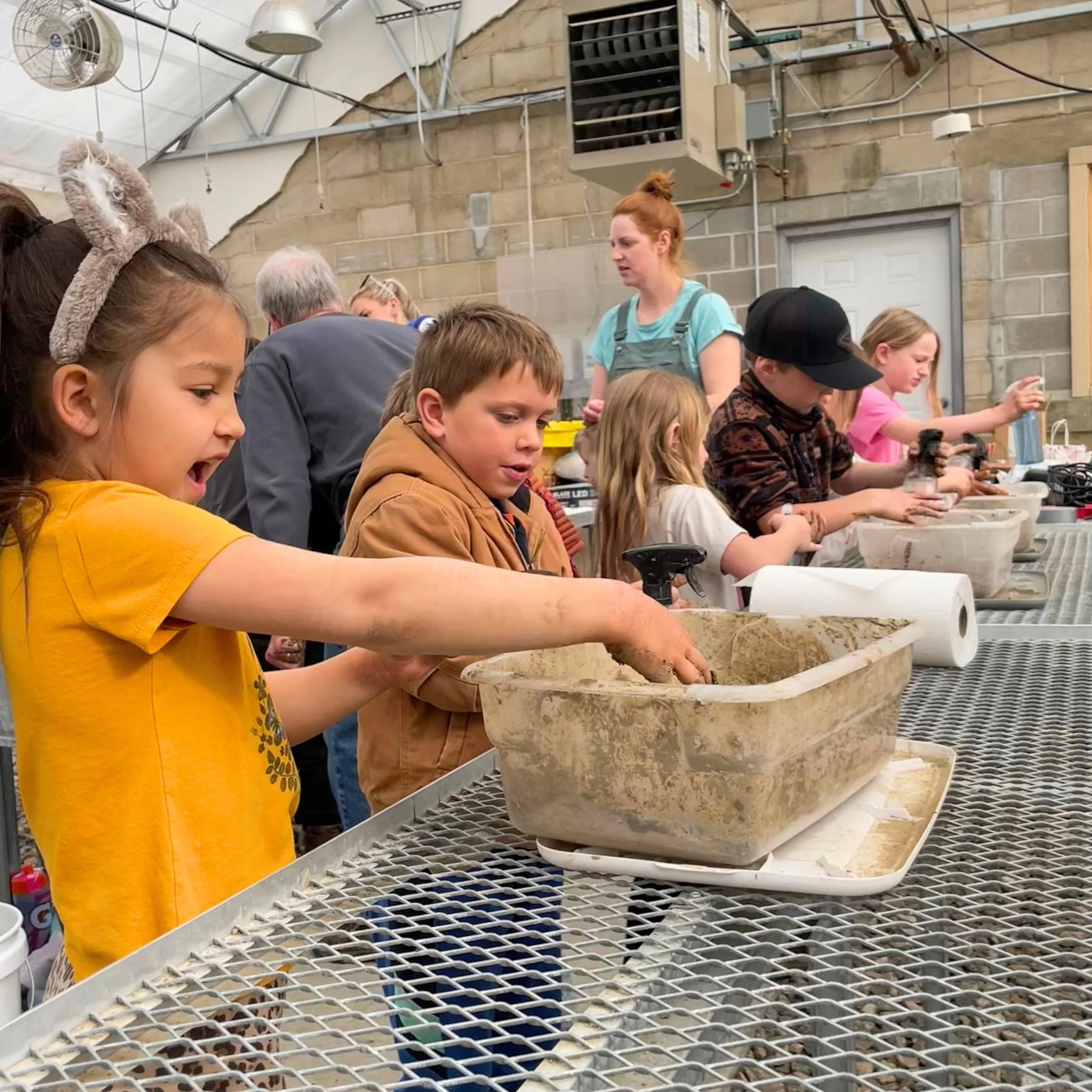
In this hands-on lesson, students investigate five soil types—sand, silt, clay, loam, and humus—to discover how texture affects plant growth. Using magnifying glasses, water, and tactile exploration, students compare how each soil feels and behaves. They learn why loam provides the ideal balance of water retention, drainage, and air space for healthy roots. The lesson concludes by connecting soil health, decomposition, and humus formation to the broader idea that healthy soil supports healthy plants—and healthy people.
-
-
By the end of this lesson, students will be able to:
Identify and describe the texture of sand, silt, clay, loam, and humus
Explain how weathering transforms rock into different soil types
Compare how water interacts differently with sand, silt, and clay
Understand why loam is considered ideal soil for most plants
Describe how decomposition creates humus
Recognize the connection between soil health, plant health, and human health
-
'“Growing Healthy Soil in the Garden” UW Extension, Barnyards & Backyards (view)
Worms & Decomposers
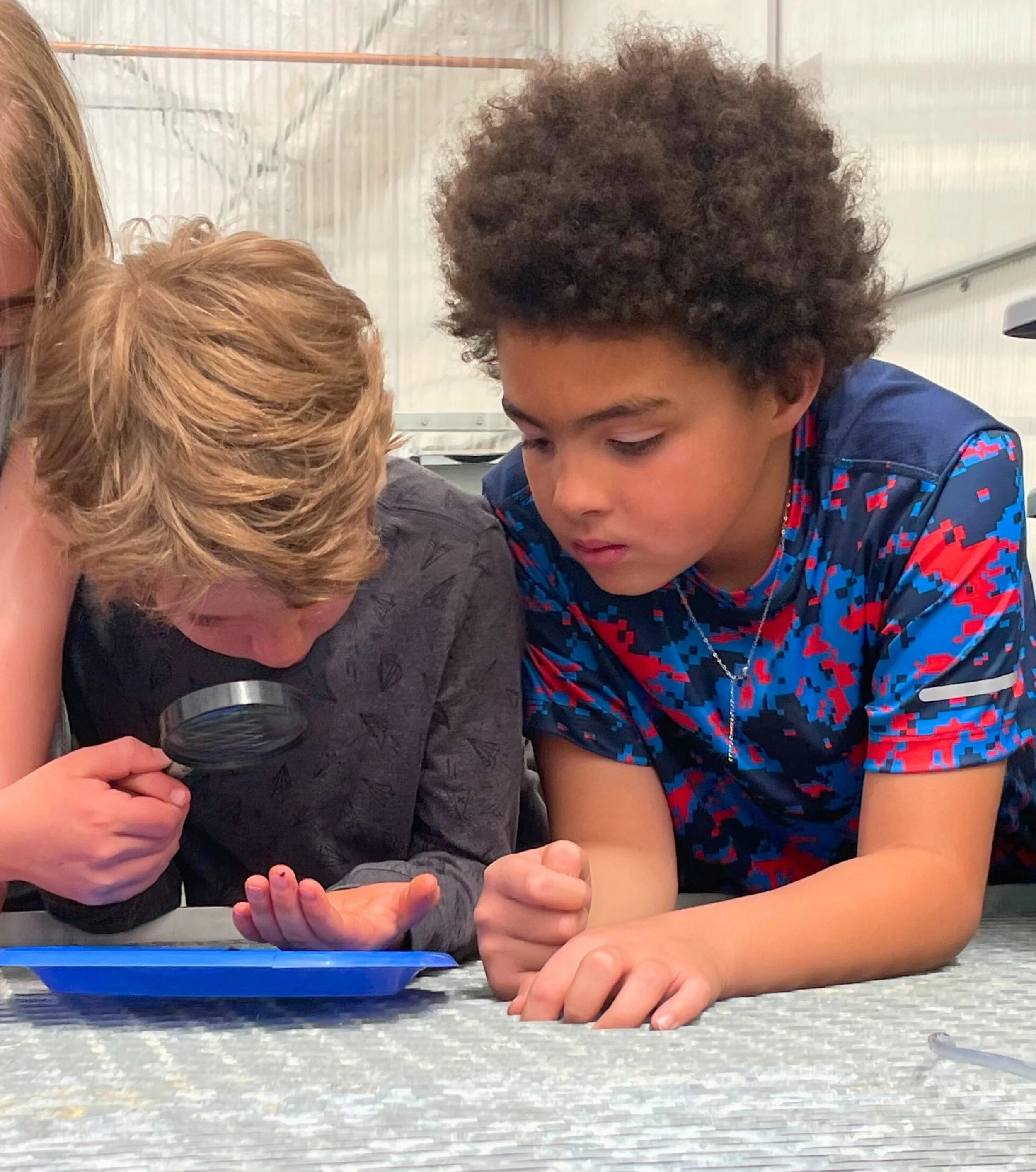
In this interactive lesson, students explore soil ecology by observing red wiggler worms and examining soil microbes under microscopes. They learn how worms, fungi, bacteria, and other microscopic organisms work together to break down dead plant material and recycle nutrients back into the soil. Through direct observation, students see how decomposition keeps ecosystems in balance. The lesson reinforces that healthy soil depends on a living community working together to support plant growth.
-
-
By the end of this lesson, students will be able to:
Describe the role of earthworms in decomposition and nutrient cycling
Identify key soil organisms such as bacteria, fungi, protists, and nematodes
Explain how plants and soil microbes exchange nutrients
Recognize decomposition as a critical process in maintaining soil health
Demonstrate respectful handling of living organisms during observation
Understand that soil is a living ecosystem made up of interconnected organisms
-
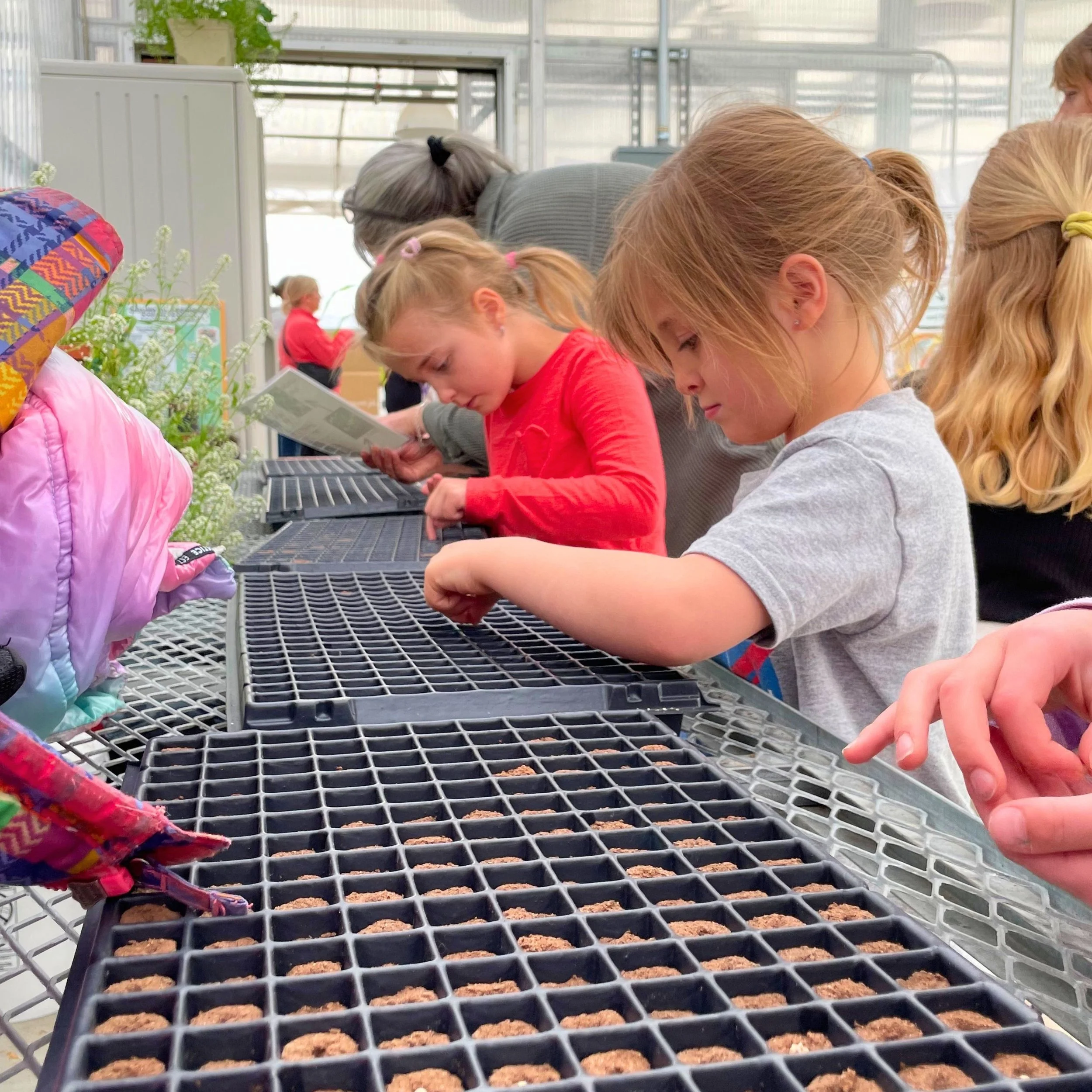
Seed Starting
In this lesson, students discover that plants grow from seeds, seeds come from flowers, and many plants provide food for people. They examine seed and plant diagrams, learn how seeds “wake up” with warmth and water, and explore how plants make their own food using sunlight. Students then plant seeds for their school garden and other community gardens, practicing proper labeling and care. The lesson emphasizes that healthy soil—including nutrients from worm castings—supports strong plant growth from the very beginning.
-
-
By the end of this lesson, students will be able to:
Explain that plants grow from seeds and seeds develop from flowers
Describe what seeds need in order to sprout
Understand that some plants provide food for people
Demonstrate proper seed-planting techniques
Identify different seeds using reference materials
Recognize the role of soil nutrients, including worm castings, in early plant growth
-
“Growing Your Own Food” UW Extension, Barnyard & Backyard publication (view)